Choose Your Steel
Every NIMOFAN katana begins as raw steel. The choice you make here defines the soul of your blade — its sharpness, its resilience, its character. Seven steels, seven traditions, one perfect match for you.
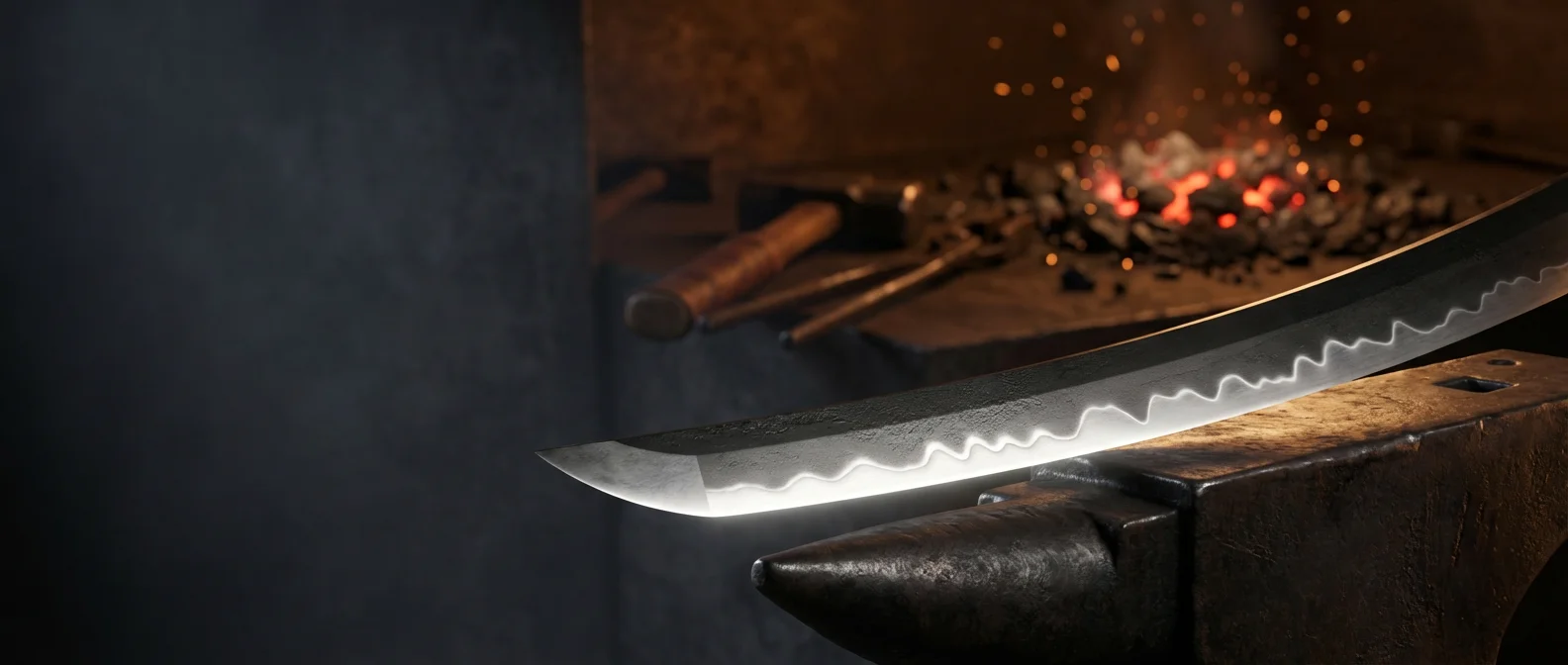
T10 Clay Tempered
36 swords · HRC 58-60 · 1.0% carbon
The premium choice of serious collectors. T10 is a high-carbon tool steel containing 1.0% carbon, 0.35% silicon, and trace tungsten — giving it exceptional edge retention while remaining responsive to traditional clay tempering. Each blade is hand-coated with refractory clay before quenching, creating the iconic white hamon temper line between the hardened edge (HRC 58–60) and the softer, more flexible spine. This differential hardening is what made historic samurai swords legendary: a razor-sharp cutting edge backed by a shock-absorbing body that won't shatter on impact.
Best for: serious tameshigiri practitioners, authentic-blade collectors, and martial artists who demand traditional craftsmanship. Apply choji oil after each use to prevent surface oxidation.
Explore T10 Clay Tempered →
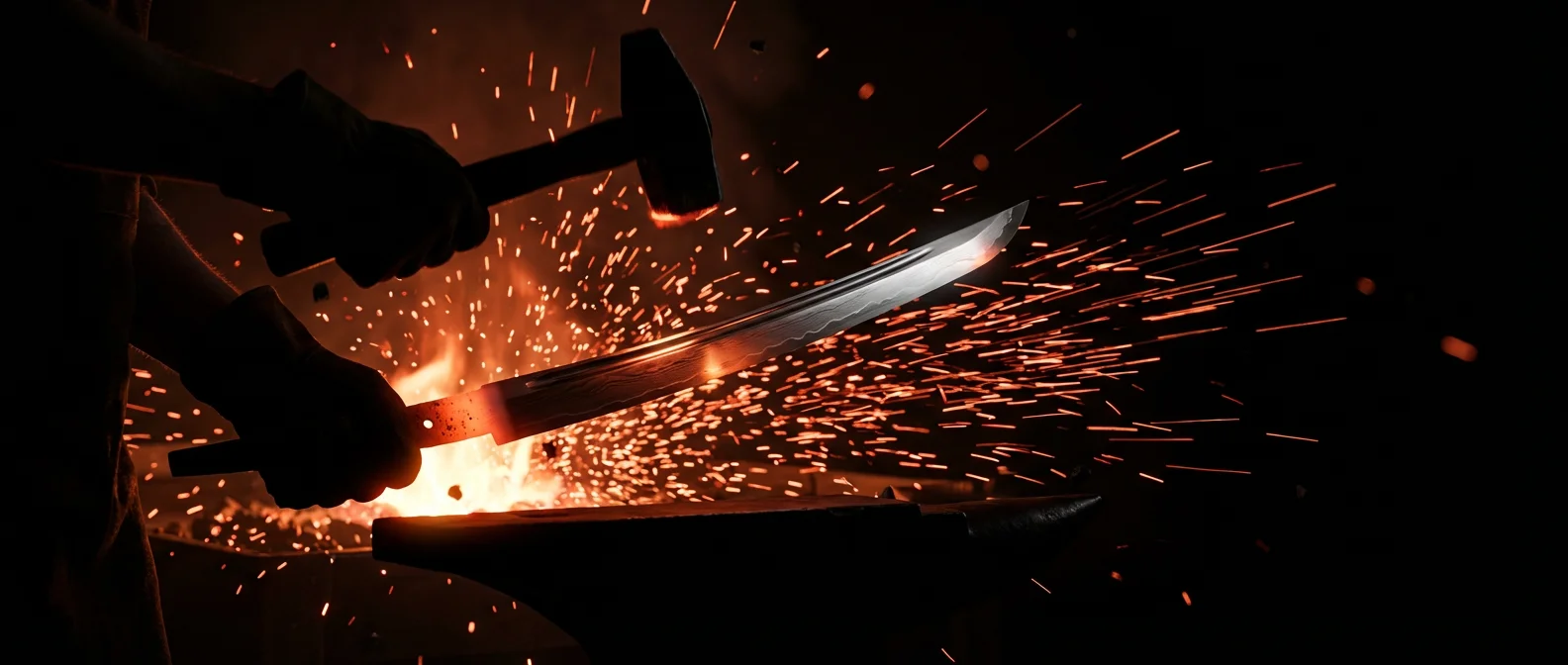
1095 Carbon Steel
3 swords · HRC 56-58 · 0.95% carbon
1095 is the gold standard of high-carbon American knife steel — 0.95% carbon with 0.4% manganese — celebrated worldwide for taking and holding a razor edge. After through-hardening, 1095 reaches HRC 56–58 across the entire blade, producing a uniformly hard and incredibly sharp cutting tool. The mirror polish achievable on 1095 is breathtaking: light dances along the entire length without interruption.
Best for: collectors who prize a flawless mirror finish, light cutting demonstrations, and display swords. Trade-off: uniform hardness means less impact resistance than clay-tempered T10 — not recommended for heavy chopping. Requires diligent oiling to prevent rust.
Explore 1095 Carbon Steel →
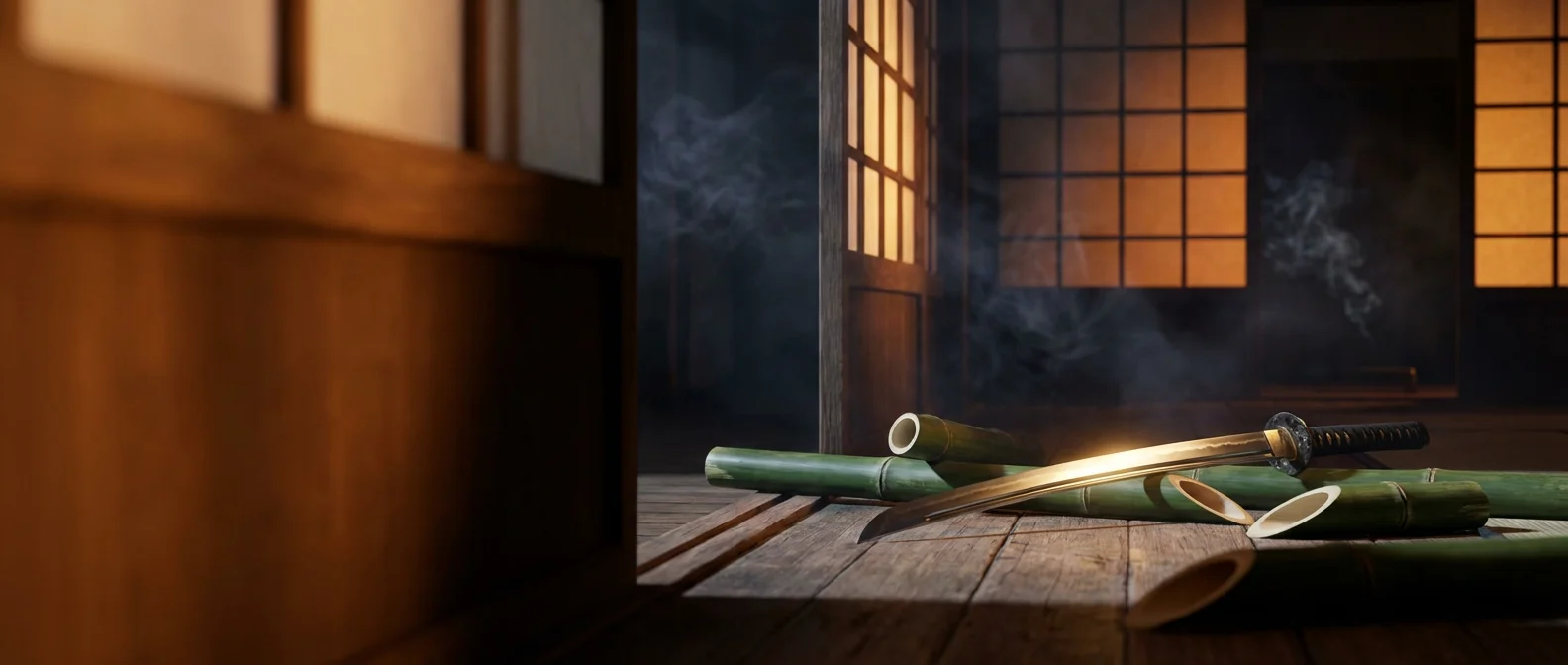
1060 Carbon Steel
11 swords · HRC 55-57 · 0.60% carbon
The workhorse of functional katana. 1060 contains 0.60% carbon — the sweet spot between hardness and toughness. After heat treatment, 1060 hits HRC 55–57: hard enough to hold a fighting edge, tough enough to absorb hard impacts without chipping or cracking. This is the steel most professional martial arts schools recommend for everyday cutting practice on tatami mats, bamboo, and water bottles.
Best for: dedicated tameshigiri practitioners, kenjutsu students, and anyone who wants a reliable cutting blade that will survive years of training. Easier to maintain than T10 thanks to lower hardness.
Explore 1060 Carbon Steel →
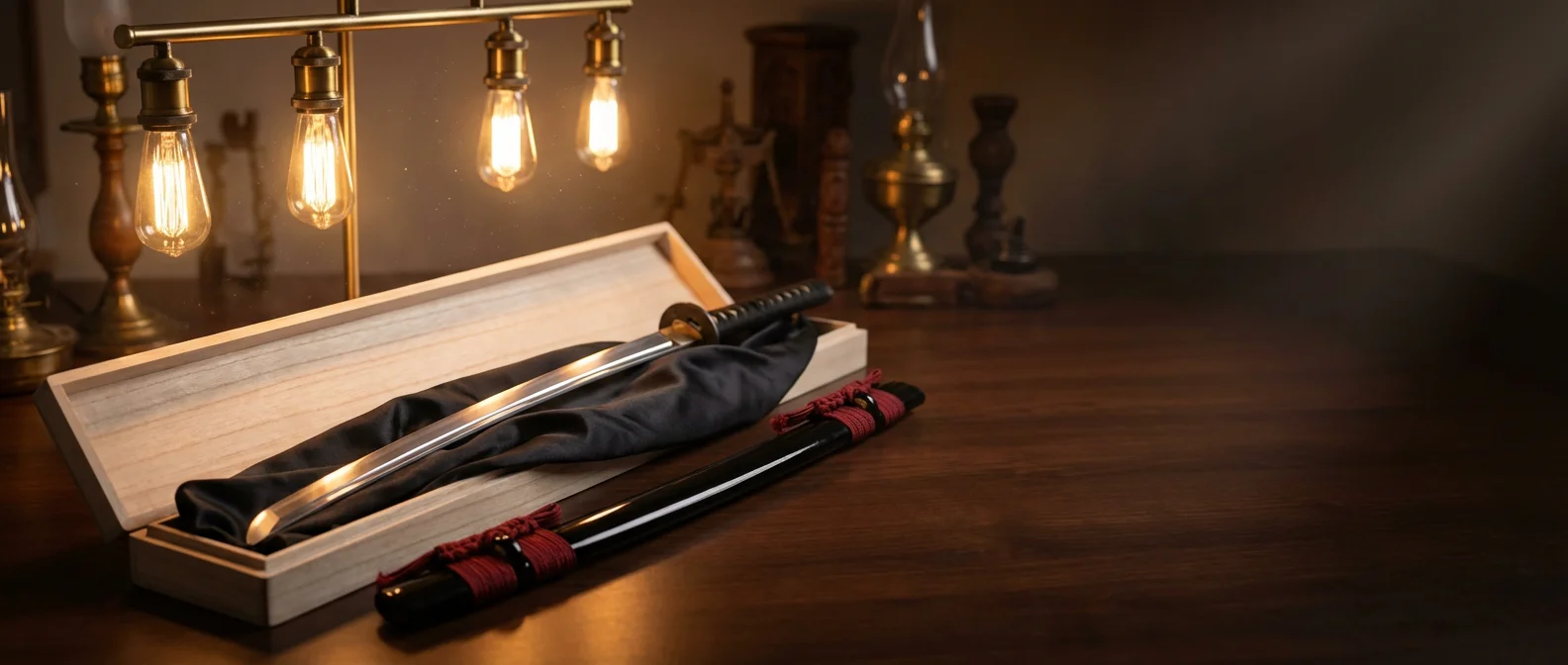
1045 Carbon Steel
16 swords · HRC 50-55 · 0.45% carbon
The perfect entry-level steel for first-time katana owners. 1045 medium-carbon steel — 0.45% carbon — offers excellent toughness and is far more forgiving than higher-carbon alternatives. With HRC 50–55, the blade holds a respectable edge while resisting chips and cracks even from rough handling. 1045 katanas are easy to maintain, affordable, and beautifully finished.
Best for: beginners exploring the world of Japanese swords, gift-giving, cosplay and costume display, and decorative wall mounting. Trade-off: not intended for heavy or repeated cutting practice — see 1060 or T10 if you plan to train seriously.
Explore 1045 Carbon Steel →
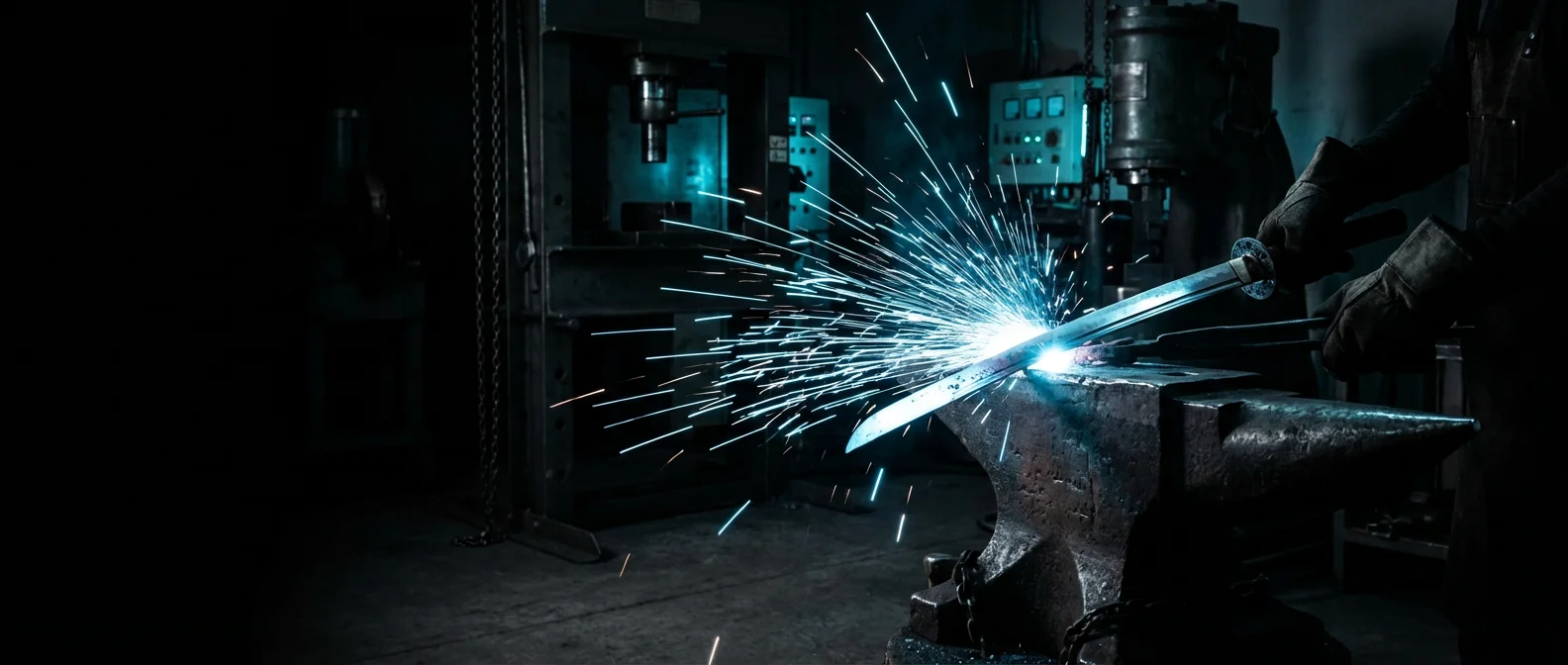
High Manganese Steel
11 swords · HRC 55-58 · 0.9-1.2% carbon
A modern industrial steel engineered for shock resistance. High manganese steel contains 11–14% manganese alongside 0.9–1.2% carbon, producing an austenitic structure that work-hardens on impact — meaning the blade actually gets harder where it strikes. This makes high-manganese katanas exceptionally resistant to chipping and bending under heavy use.
Best for: intensive cutting practice, repeated tameshigiri sessions, and practitioners who put their swords through serious abuse. The blade can be polished to a beautiful satin or mirror finish. Modern alternative to traditional steels — equally functional, often more durable in real-world cutting.
Explore High Manganese Steel →
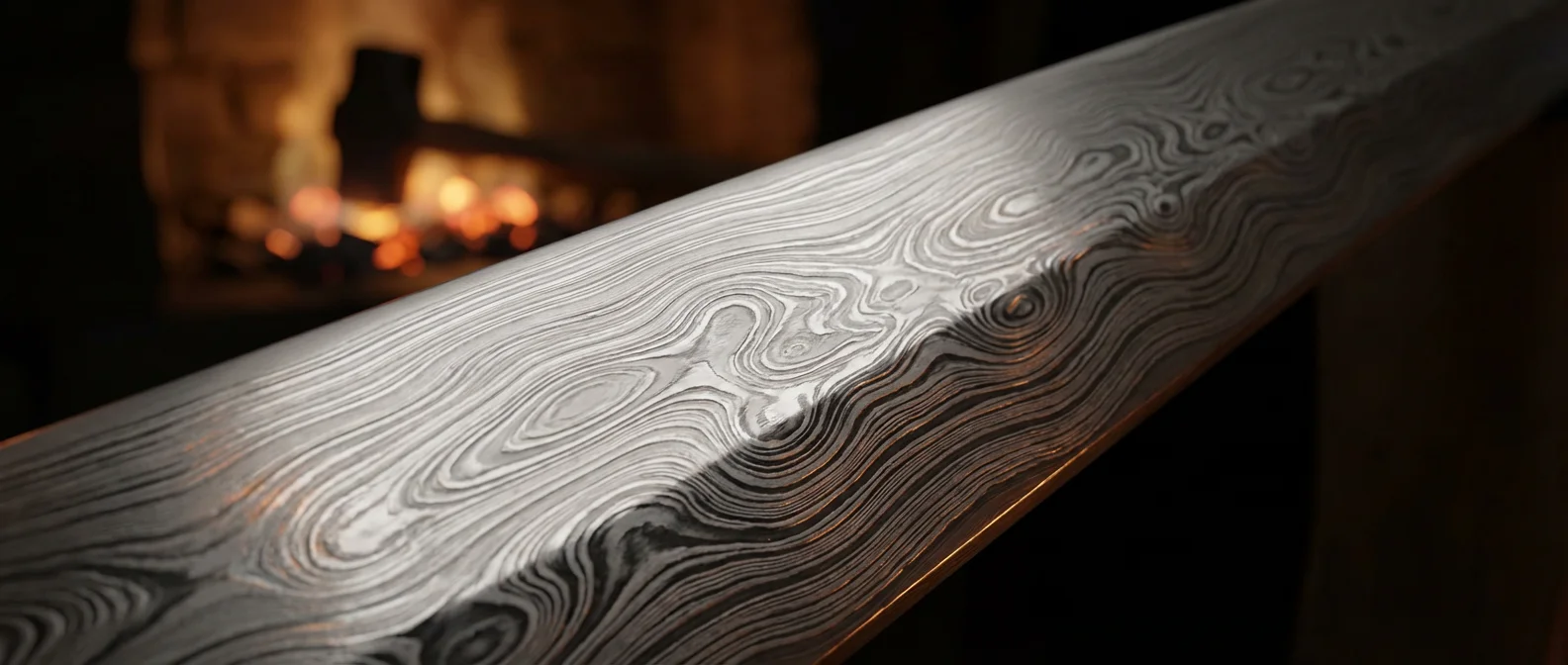
Folded Steel
3 swords · HRC 58-62 · Variable carbon
The pinnacle of traditional Japanese sword-making artistry. Folded steel (orikaeshi tanren) is forged by repeatedly heating, hammering, and folding two or more steel billets — sometimes 10 to 16 times, producing thousands of micro-thin layers. The result is the unmistakable hada: a flowing wood-grain or wave pattern visible across the polished blade surface. Folding evens out carbon distribution and removes impurities, yielding a blade with both beauty and balanced performance.
Best for: serious collectors, heirloom pieces, gifts marking major occasions, and connoisseurs who want a sword that doubles as art. Each pattern is unique — no two folded blades look exactly alike.
Explore Folded Steel →
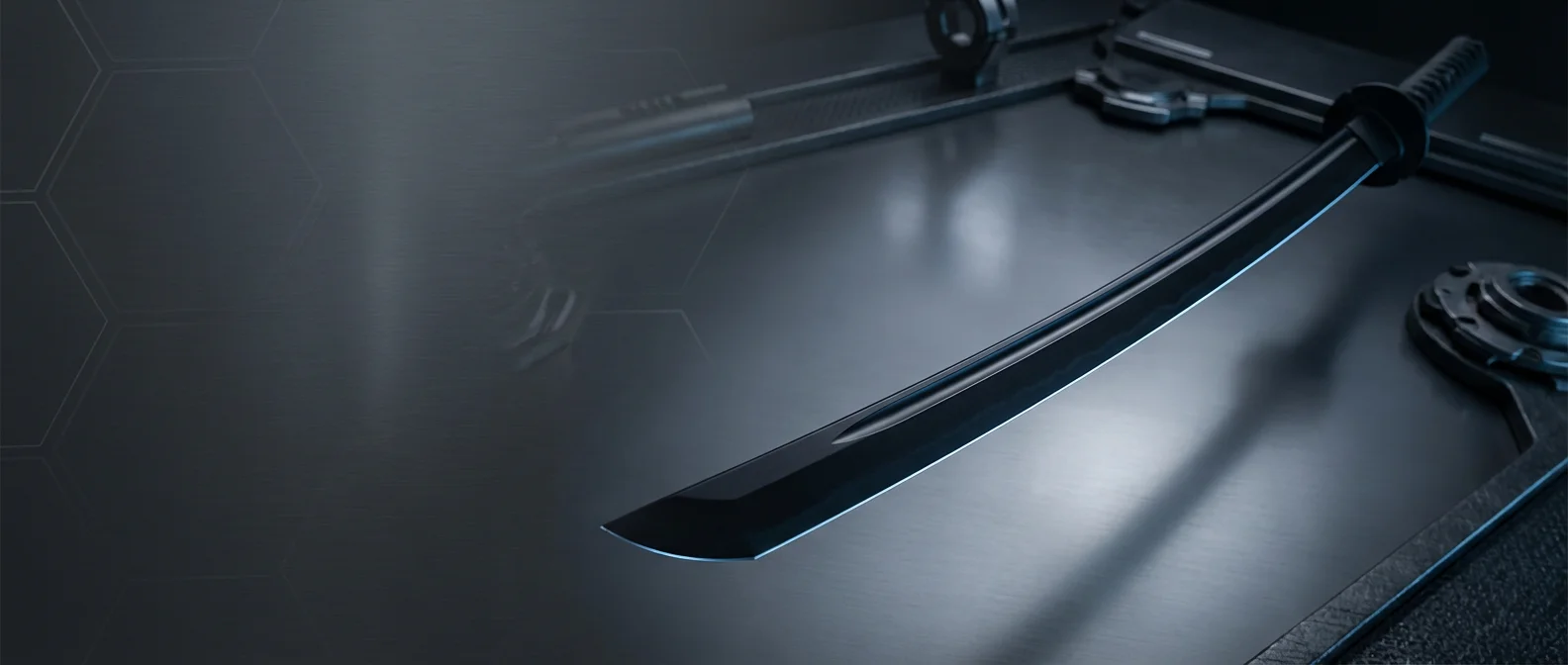
Ceramic Coated
5 swords · HRC 55-58 · 0.6-0.95% carbon
Modern technology meets samurai tradition. A high-carbon steel core (typically 1060 or 1095) is coated with a matte black ceramic film — a surface finish originally developed for tactical knives. The ceramic layer is harder than the steel beneath, virtually eliminates glare, and provides serious corrosion resistance. The resulting blade is silent in low light, never reflects a giveaway flash, and shrugs off humidity that would tarnish a polished blade.
Best for: tactical enthusiasts, modern aesthetics lovers, low-maintenance owners, and anyone who wants the cutting performance of carbon steel without the constant oiling. The matte black finish is dramatic, contemporary, and unmistakably modern.
Explore Ceramic Coated →
Can't Decide?
Forge a katana to your exact specifications — steel, length, fittings, all yours.
→ Custom Your Sword